Holistic Therapy
Build a lifestyle that nourishes your
mind AND body.
Certified as a Holistic Psychologist, I integrate the body, mind, and spirit to address the complex factors that impact your well-being. Originally trained in health settings, I bridge the gap between clinical science and whole-person healing.
I not only utilize evidence-based therapies to address mental health problems, but I also integrate trauma-informed and research-supported holistic strategies to foster safety within the brain, body, and spirit.
The research supported tools utilized:
Trauma-Informed Yoga & Movement
Breathwork
Sound Meditation
These practices can be standalone sessions or integrated into our sessions when clinically appropriate or upon your request. Your autonomy is a priority; participation is always voluntary, and you have the right to decline any modality that does not resonate with you.
The Science of Stillness: Yoga, Breath, and Sound
These tools aren’t a replacement for evidence-based therapy; instead, they help you build a lifestyle that nourishes both mind and body. While traditional therapy utilizes "top-down" cognitive processing, somatic modalities such as yoga, breathwork, and sound meditation employ bottom-up regulation to shift the nervous system into a state of safety (Porges, 2011).
By regulating your nervous system, you can be more grounded and present in your day-to-day life. This increased physiological stability allows you to be more aware of when you are stuck on thoughts or avoiding challenges, giving you the clarity to intervene more quickly.
Yoga: Beyond physical exercise, it is a tool for interoception—the ability to sense the body's internal state. Research indicates that yoga increases vagal tone, which helps stabilize mood and reduce the physiological impact of stress (Streeter et al., 2012).
Breathwork: The breath acts as a "bridge" between the conscious and unconscious mind. Controlled breathing stimulates the vagus nerve and triggers a shift from "fight-or-flight" to "rest-and-digest," providing an immediate pathway for emotional regulation (Gerritsen & Band, 2018).
Sound Meditation: Sound frequencies can quiet the "analytical" brain and the default mode network—the area associated with rumination. This facilitates a deep state of relaxation, making it easier to find your center and observe emotions without being consumed by them (Goldsby et al., 2017).
By lowering your baseline of physiological arousal, these practices expand your "window of tolerance." This ensures you aren't just surviving your day, but are actively building the resilience needed to engage deeply with the therapeutic process and show up fully for your life.
References
Gerritsen, R. J., & Band, G. P. (2018). Breath of Life: The Respiratory Vagus Nerve Stimulation Model of Contemplative Activity. Frontiers in Human Neuroscience.
Goldsby, T. L., et al. (2017). Effects of Singing Bowl Sound Meditation on Mood, Tension, and Well-being. Journal of Evidence-Based Complementary & Alternative Medicine.
Porges, S. W. (2011). The Polyvagal Theory: Neurophysiological Foundations of Emotions, Attachment, Communication, and Self-regulation. W. W. Norton & Company.
Streeter, C. C., et al. (2012). Effects of Yoga on the Autonomic Nervous System and Gamma-aminobutyric Acid. Medical Hypotheses.
Clinical Disclaimer
Note on Medical Care: While I am a doctor of psychology, I am not a medical physician. Holistic practices can effectively reduce symptoms related to certain physical illnesses; however, my work is intended to support mental and emotional health and is not a substitute for medical treatment. Please consult with your primary care physician or a qualified medical professional regarding any physical medical conditions.
-
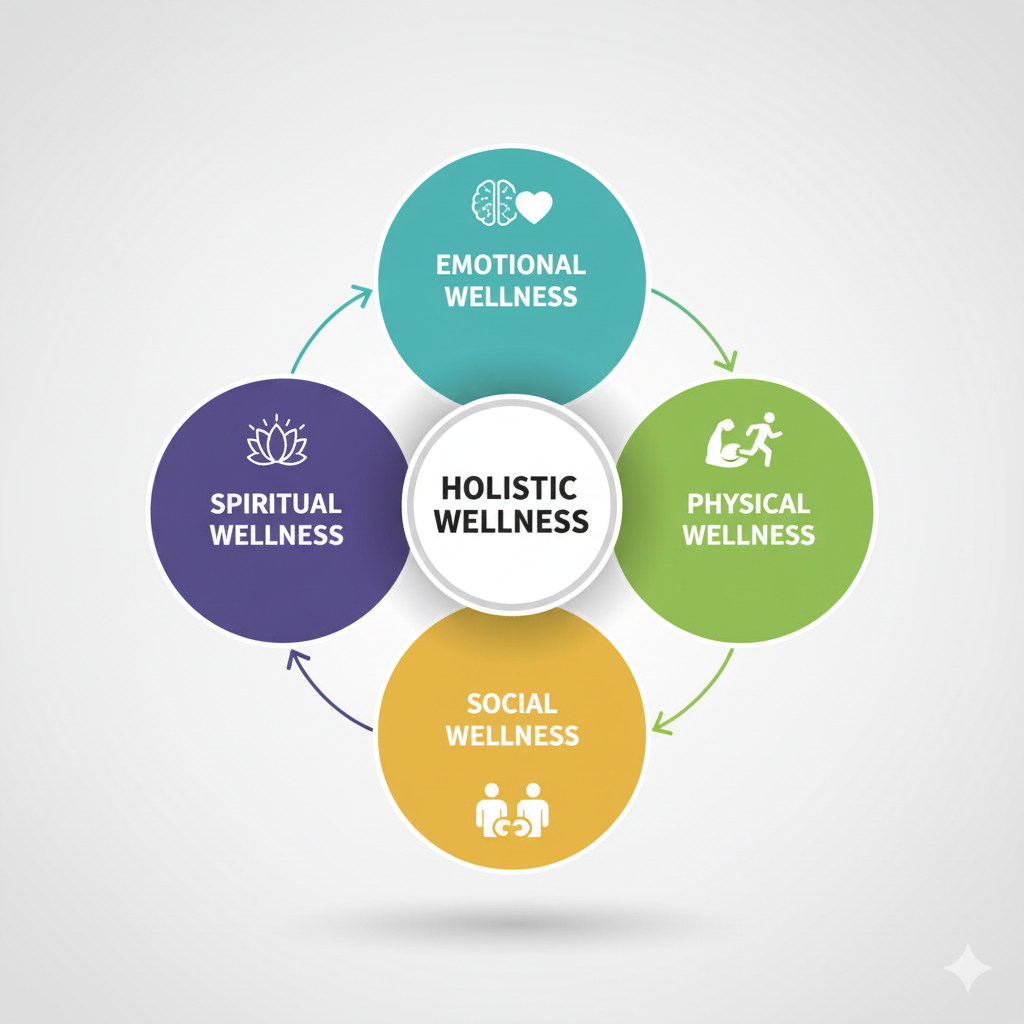
Discover new ways to engage with your thoughts and feelings using evidence-based strategies, allowing you to navigate challenging experiences with greater clarity and resilience. Discover how to boost motivation and tap into your inner resources to guide you toward a values-based and fulfilling life. Through the use of mindfulness, self-compassion, and other emotional and cognitive strategies, you will be able to lead the life you want and deserve.
-
Physical wellness requires a commitment to the fundamentals. Develop a consistent and realistic plan to optimize sleep, movement, and nutrition. Crucially, incorporate practices for nervous system regulation to soothe the body's stress response and reinforce emotional resilience.
-
We are wired to connect with nature and community, and yet it can be challenging to nourish this need. Your desire to connect to the world around you is a core biological imperative and a fundamental need for belonging. Prioritize building and nurturing these healthy relationships to strengthen your resilience and enrich your life.
-
Spiritual wellness is your inner compass, guiding you toward meaning and purpose in your life. This internal sense of faith—in yourself, your core values, or a higher power—is the essential foundation for resilience. It empowers you to act boldly and intentionally, ensuring you live a rich and vital life.